
It will help to stop widening of Current Account Deficit.

The government has also built in mechanism to protect investors from price fluctuation.

Investors may take a 5 to 10 per cent exposure to silver. 'Have a long-term investment horizon when investing in silver ETFs to ride out short-term market fluctuations.'

Despite its recent underperformance, gold must be a part of your portfolio.

Given the economic trends, it might make sense to allocate some savings to gold.

Physical assets such as gold and real estate have their own positives and negatives, while other financial assets such as mutual funds, stocks and bonds come with their pluses and minuses. Let us look at both options in a little more detail.

'Investors with as little as Rs 1 can start investing in digital gold.'

Fund houses have been barred from being net sellers or holding net short positions at the scheme level in commodities.

Ask rediffGURU and PF expert Nitin Narkhede your mutual fund and personal finance-related questions.

Gold, a safe-haven bet, is likely to continue its record-smashing journey in the New Year, rising to Rs 85,000 per 10 grams and even Rs 90,000 level in domestic markets if geopolitical tensions and global economic uncertainties continue.

The net inflow in equity mutual funds plunged 76 per cent to Rs 2,258 crore in November over the preceding month amid a sharp up move in the stock market that made investors wary of higher valuation. This also marks the 21st straight month of inflows into equity schemes. Overall, the mutual fund industry registered net inflows of Rs 13,263 crore in November, slightly lower from Rs 14,045 crore seen in the previous month, data released by the Association of Mutual Funds in India (Amfi) showed on Friday.

'You should always maintain an allocation to gold as it has the ability to counterbalance any correction in the equity market.'

While the minimum holding period for LTCG taxation has now been lowered, the tax outgo could be a bit higher under the new structure.

Risk-averse investors can hold up to 10 per cent of their portfolio in gold, while aggressive ones can keep five per cent.

After a stellar 2023, the mutual fund industry sustained its growth momentum in 2024 with an impressive Rs 17 lakh crore surge in assets, driven by buoyant equity markets, robust economic growth, and increasing investor participation. Experts are predicting the positive trend will extend into 2025.

Smallcap mutual funds recorded net outflows for the first time in 30 months in March as investors pulled out money after the markets regulator, the Securities and Exchange Board of India (Sebi), warned against "froth" in the mid and smallcap space. Active equity mutual fund (MF) schemes raked in Rs 22,600 crore in March. The March inflow is 16 per cent lower than the two-year high inflow of Rs 26,860 crore in February, shows data from the Association of MFs in India (Amfi).

Any shift in investor sentiment may result in speculators fleeing the gold market, driving its price down sharply, quickly. One significant risk for gold is a near-term reversal in the dollar, which recently fell to a two-year low.

Global gold demand hit an 11-year low in 2020 at 3,759.6 tonnes, mainly due to a weak October-December quarter and the COVID-19 related disruptions across the world driving a muted consumer sentiment throughout the year, the World Gold Council (WGC) said in a report. The overall consumer demand during 2019 was at 4,386.4 tonnes, while in 2009 the overall demand was at 3,385.8 tonnes, according the WGC's 2020 Gold Demand Trends report. Global gold demand dropped by 28 per cent year-on-year (YoY) to 783.4 tonnes in the fourth quarter compared to 1,082.9 tonnes during the October-December period of 2019, the report stated.

Gold prices have been on an uptrend in the last few months, rising nearly 28 per cent to $2387 per ounce now. This rise in gold price, according to Christopher Wood, global head of equity strategy at Jefferies, is attributed to the demand from China amid lack of investor euphoria as regards the yellow metal. "Recent developments show a distinct lack of investor euphoria as regards gold, the question remains what is driving the current rally.

Investing is not just about setting aside money -- it's about making it work for you, says Ramalingam Kalirajan.

At a time when the whole world is going ga-ga over stocks and debt is too easy to borrow, do not forget gold, says Anil Rego.

Equity mutual funds witnessed an inflow of Rs 35,943 crore in November, marking a drop of 14 per cent on a month-on-month basis, amid heightened volatility in stock markets driven by various macroeconomic factors, geopolitical events and US election results. Despite this, it marked the 45th consecutive month of net inflows into equity-oriented funds, reflecting the growing popularity of mutual funds among investors, according to data from the Association of Mutual Funds in India (AMFI) released on Tuesday.

Jimmy Patel, MD & CEO, Quantum Mutual Fund, suggests some valuable financial gifts for your children.

Given the uncertainties around gold's future course, stagger your purchases and buy on declines, says Sanjay Kumar Singh.

Commodity ETFs (exchange traded funds) attempt to track the price of a single commodity, such as gold or oil, or a basket of commodities by holding the actual commodity in storage, or by purchasing futures contracts.

'We suggest an equity strategy of 5% to 10% exposure to cash, 5% to Gold ETF, close to 50% to Sensex/Nifty/large mid-cap stocks.'
A substantial fluctuation is likely because for a long period gold has moved in a narrow range of $ 50-60 and at higher levels short positions were built.

Gold has risen sharply due to rising risk aversion

The Rs 84,000 crore domestic fund of funds (FoFs) space, which was in the doldrums over the past 18 months, has now caught the attention of investors due to a change in the tax structure in Budget 2024. The broader category, which includes offerings across equity, debt and commodities, has seen a spike in the inflows over the past two months. FoFs typically deploy the pooled capital in one or multiple MF schemes rather than investing directly into equities, debt or commodities.
Retail investment demand for gold bars and coins as well as central bank purchases pushed the global gold demand by 28 per cent to 1,181.5 tonnes in the September quarter, according to the World Gold Council report. The total global demand stood at 921.9 tonnes during the July-September quarter of 2021, the World Gold Council's 'Gold Demand Trends Q3 2022' showed on Tuesday. Investment was down 47 per cent year-on-year as gold backed Exchange Traded Fund (ETF) investors responded to a challenging combination of higher interest rates and a strong US dollar with significant outflows of 227 tonnes.
While e-gold is cheaper than gold plan, it's not tax-friendly like gold ETFs.
Analysts see steady long-term gains, say volatility to last for a short while.
Did you ever think that investing in real estate would one day be as simple as investing in mutual funds? If no, please read on...

With Indian jewellery market already on the robust recovery path, the jewellers are expecting strong Diwali sales in the Dhanteras as the festive mood remains high with low Covid third wave possibility and softer gold price this season. The industry expects the trends in 2021 will be able to reach pre-covid level sales of 2019 on the back of gold price hovering at Rs 46,000-47,000 per 22 carat 10 grams gold nearly 5 per cent lower than 2020, and jump in number of weddings, a senior official of an industry body said. "Since Navratri market is showing demand. It will continue on Dhanteras also.
Depending upon your risk tolerance and time horizon you can now invest in real estate too without many hassles.
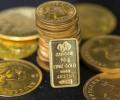
The best part is that an investor gets price appreciation and earns interest income as well, which is unique only to sovereign gold bond.

If you already hold significant amounts of equity in your portfolio, avoid MAAFs with over 60 per cent equity. But if you lack equity exposure, an aggressive MAAF may be appropriate.

Global gold demand has seen a year-on-year decline of 8 per cent during the April-June period to 948.4 tonnes and going ahead further monetary tightening and continued dollar strength may pose headwinds, says a report. According to the WGC Gold Demand Trends Q2 2022 report, the total gold demand during the second quarter of 2021 stood at 1,031.8 tonnes. The year-on-year demand was affected by increase in gold electronic traded funds (ETFs) outflow, decline in Central banks buying and lower demand from the technology segment, the report said.

Treat silver as part of the procyclical or growth assets in your portfolio, advises Sanjay Kumar Singh.
Retail investors have never had it so good in terms of diverse products from mutual funds.
